Hello, Tennessee!

Mostly just driving today.  I drove from Lexington, VA to Knoxville, TN.  I did make one stop on the way, not on the agenda, but I saw it, had heard about it, so I stopped.  I visited Natural Bridge State Park in Virginia on my way out. It was pretty cool, not a long hike, but lots of stairs down at the beginning (and then back up at the end, much harder at that point).  After seeing the bridge (by the way, U.S. 11 passes right over the top of the bridge, so that should tell you something about the size of the bridge) I than continued up the trail to view Lace Falls.

If you look close on the second picture, you can see a wall on top of the bridge.  I’m guessing this is to provide sound and visual protection for the people viewing the bridge from below, as I couldn’t hear the cars (they are a little over 200 feet up), but I’m not sure.  The third picture is the Lace Falls, you can tell where the name comes from.  Other than that, I just drove.  Kind of a quiet day.  We’ll see what the future holds.  Happy Road-Tripping!

Farewell to Virginia

Ok, not quite.  I’m staying in Lexington tonight, but in the morning, it’s on to Tennessee.  I had some questions about what I’m eating.  I’m not much of a foodie, I tend to not be to daring in my eating choices.  That being said, I do try to eat at restaurants not available at home.  Tonight, I ate at a place called Southern Inn.  It’s a little price, but the food was pretty good.  I had fried chicken (like I said, I don’t tend to branch out much, especially when I’m by myself) but it was much better than I expected.  First off, it was boneless, but it didn’t look like it when it came out.  I don’t know if I can explain this well.  It looked like a typical fried chicken breast.  But when I started eating it, I quickly realized that it was boneless.  The crust was crispy, and thick but not heavy, if that makes sense.

Anyway, on to the other things I did today.  I started at Appomattox Courthouse.  I wandered around for a while, looking at the sights.  I saw the McLean house.

Wilmer McLean had lived near Manassas.  As the armies began to gather at the beginning of the Civil War, McLean’s home was used as the headquarters for General Beauregard.  It gets worse than uninvited guests, though.  A cannonball tore through the summer kitchen and destroyed it.  After the battle, McLean moved down to Appomattox, to the house shown in the first picture, thinking that he was far enough away.  But in April 1865, the war followed him.  One of Lee’s staff officers was looking for a place to have the meeting that would decide the terms of Lee’s surrender.  McLean reluctantly offered his parlor.  You can see a recreation of the parlor in the second picture.  Lee used the marble-top table, Grant used the other.  Afterwards, McLean saw anything and everything in the room disappear.  Some of it was paid for, but not all.  In the 1890’s, an enterprising individual tore down the house, intending to move it to D.C. (or possibly New York).  The plans fell through, and he just left the materials lying there.  So the house is a recreation.  The furniture is all recreations, though the originals are in the Smithsonian, except for Lee’s table, which is in Chicago.

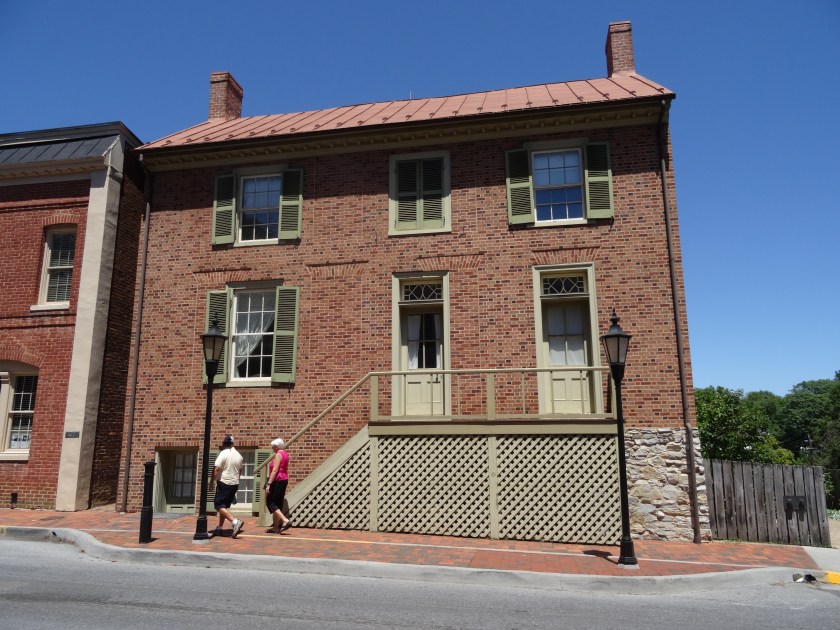
I than traveled to Lexington.  Lexington has done a good job of making their city pedestrian-friendly.  Lots of free parking (I parked in a garage, where I could leave my car all day, at no cost!) and everything is relatively close.  I went to the home of Thomas Jonathan Jackson (we know him now as Stonewall) and his wife Anna.
DSC01318

Jackson and his wife only lived here for a few years before the Civil War.  In 1861 he left for war, and she went to live with her parents.  They would never return.

I then walked to the campus of Washington and Lee University, where I saw the home where Lee and his wife lived out the remainder of their days.  And I stopped at the Lee Chapel, where Lee attended Church, and where he is buried, along with his family (wife, parents, children, grandchildren).  His horse, Traveller, is buried right outside.

This is the recumbent Lee statue, and Traveller’s grave marker, and the outside of the Lee Chapel.  Note in the statue, he has his sword by his side, and his legs are crossed.  This is not Lee lying in state, this is Lee resting in his tent, ready to rise at a moments notice.  This is how his wife wanted him remembered.

I then traveled to the Virginia Military Institute, where I saw a memorial to VMI students killed at the Battle of New Market in 1864.  Of the 10 killed, 6 are buried behind the statue.  I also went to the museum there on campus, where, among other things, they have a few displays on Jackson (he taught there for 10 years).

In the display, the uniform on the left is his VMI uniform.  That’s the uniform he wore at Manassas.  The other coat you see is the raincoat he was wearing at Chancellorsville.  If you look close, you can see the bullet hole in the left shoulder.

Finally, I walked to the cemetery where T.J. Jackson, his first wife (who died in childbirth) and their children (none of whom lived very long), his second wife and their two children (only his daughter, who was a few months old when he died, lived past infancy), his daughter’s husband, and some of his descendants.
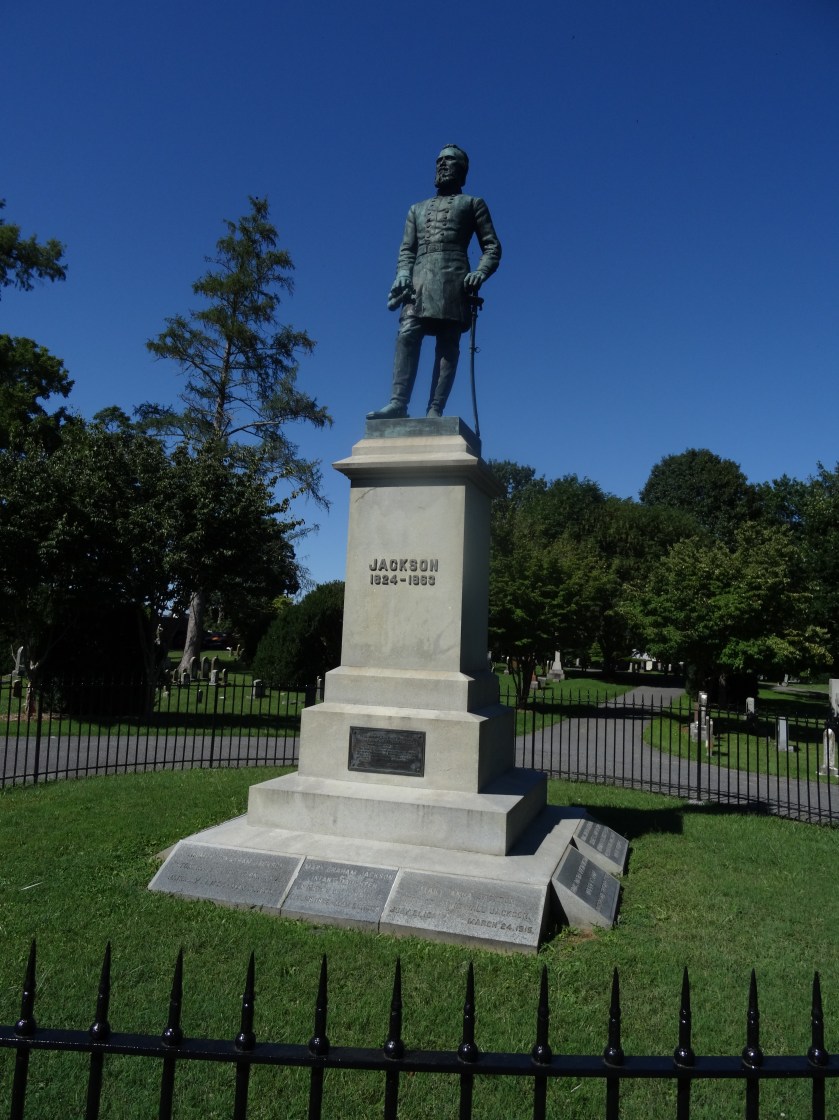
DSC01333

Something that might be of interest, Stonewall’s grandson was a General in the U.S. Army, and his great-grandson served in the Army Air Force during WWII, and was shot down and killed in 1944.

All in all, it was a busy day.  Tomorrow will most likely be mostly driving, so I would like to ask if there is anything you (any readers still with me) might like to know, or want to hear more about.  Let me know.  Happy Road-Tripping!

A visit to Mr. Washington

I traveled to Mt. Vernon today.  It is my second visit here, though the first one was 26 years ago.  George Washington inherited this home from his half brother, Lawrence.  He would add on the second story, as well as the wings on either end.  This is where he always wanted to be, and when he retired at the end of the Revolutionary War, and at the end of his two terms as President, he quickly returned here.

The first picture is the Washington family, George, Martha, and two of Martha’s grandchildren.  I believe the little girl is Nelly Custis.  The little boy holding Washington’s hand is George Washington Parke Custis.  These two were raised by George and Martha.  The boy would grow up, build a big house overlooking Washington, D.C., and his daughter would marry Robert E. Lee.  The house, obviously, is Mt. Vernon, and though this is the side you approach first as you come up to it today, it is actually the back of the house.  The front of the house gives you the view shown in the panorama shot.  That is the Potomac River, and on the far side is Maryland.  The land there is a National Park, so as to prevent any development to ruin this view that is essentially unchanged from Washington’s time.

Other than that, it was a driving day.  I am beginning to work (slowly) back towards home.  I have a few more stops in Virginia, but by Monday or Tuesday, I’ll be in Tennessee (unless I have any problems with a Mr. Grayson).  Happy Road-Tripping!

Winchester

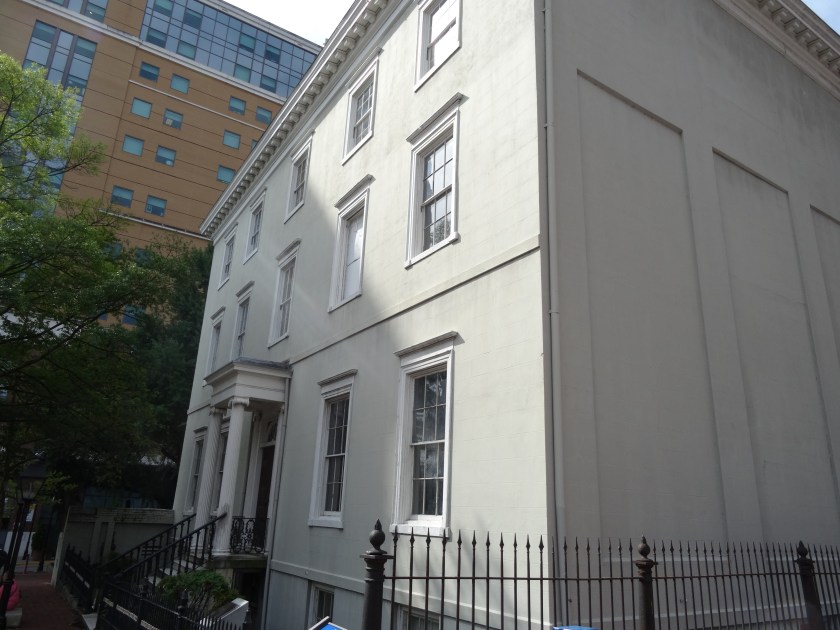
I drove to Winchester today to see a few things. First, let me tell you about Winchester. Winchester, or Frederick as it was originally known, was organized into a town about 1752.  One of its early residents was George Washington, who came there a few years later as a colonel in the militia, in order to help the people defend themselves before and during the French and Indian War.  Washington would set up shop in this building:

He would work out of this building, organizing a regiment of militia, until a fort could be built.  He would leave from here to march with General Braddock in the failed attack on fort Duquesne (where Pittsburgh is, if you don’t know).

Fast forward to 1861.  Stonewall Jackson is sent here after the 1st Battle of Manassas to defend the Shenandoah Valley.  He is given the use of a home (I don’t have any pictures, sorry) north of Winchester to use as a headquarters.  He would remain here until about March or April of 1862. Winchester would suffer greatly in the Civil War, changing hands 72 times, with 13 of those happening in one really bad day.  Needless to say, Winchester was a wreck.  You might find this interesting.  The owner of the house, who let Jackson use it, was a man named Lewis Moore.  Some years ago, a T.V. actress, who was quite well known, came and toured the home.  After the tour, she asked if there was anything she could do for the organization that ran to museum.  They said that they had a scrap of the wallpaper that had been in Jackson’s office, and asked if she could get it replicated so they could put it up as it would have been.  She did so, and had it installed, all at her expense.  She would do much more through the years.  The actress: Mary Tyler Moore!

However, one house that did survive, a log cabin, was eventually painted, plastered, etc., and turned into a home.  In 1948, it was purchased by a Hilda Hensley, who was divorced, with 3 children. The oldest, Virginia Patterson Hensley, or “Ginnie,” started singing with groups in the area, including Jimmie Dean, and Bill Peer.  She soon changed her first name to Patsy.    Shortly she married a man by the name of Gerald Cline.  She recorded a few songs, got divorced, and hit it big in 1957 on “Arthur Godfrey’s Talent Scouts” with the song, “Walkin’ after Midnight”.  Patsy Cline would move to Nashville, but would return frequently to visit her mother in this home, until she died in a plane crash in 1963 at the age of 30.

The floors are all original wood from the home.  Even the wheelchair ramp was made from the same wood that was found in the attic.  The sewing machine was used by Hilda to make clothing to support the family.  The picture was sent to Hilda from Patsy, and is inscribed, “To Mom, We finally made it.  All my love.”  The bedroom was shared by the whole family to save on heating costs.  The far bed was Patsy’s (you can see a pair of her pants on the bed), the closer one was share by Hilda and the other daughter (sorry, don’t remember names), and there is a bed behind me that Hilda’s son slept in.  One more thing.  The family (two cousins work at this museum) still called her Ginnie, even after she became famous, and aren’t sure where “Patsy” came from.

That’s all I have today.  Happy Road-Tripping!

The Bloodiest Day

Pop Quiz!  What day in America’s History saw more men end up as casualties than any other day?  Hint:  It’s not D-Day.  If you said Antietam, you are correct.  If you said Sharpsburg, you are correct.  Both names are commonly used.  If you said anything else, sorry, no prize for you.  Antietam had at least twice as many casualties as D-Day, and more than the Revolutionary War, Mexican-American War, War of 1812, and Spanish American War combined!  At least 4,000 dead, 17,000 wounded, and 2,000 missing.  D-Day had about 10-12,000 total.  Something to ponder.

I took a lot of pictures, but I will only post a few here, of what I feel are the important points of the battle.

Now, the first thing about Antietam is that it took place in three parts.  You could almost say it was three separate battles in one day.  Ok, enough of that.  The building you see is the Dunker Church.  This was the key to the first phase of the battle.  The Union army had this as their goal, the Confederate army was defending the position.  The other picture (I guess I should have got a little closer) is The Cornfield.  This is where most of the fighting took place, as it is just north of the Dunker church.  When one Confederate General who sent his men in here, John Bell Hood, was asked where his division was, he answered, “Dead on the field.”

DSC01247

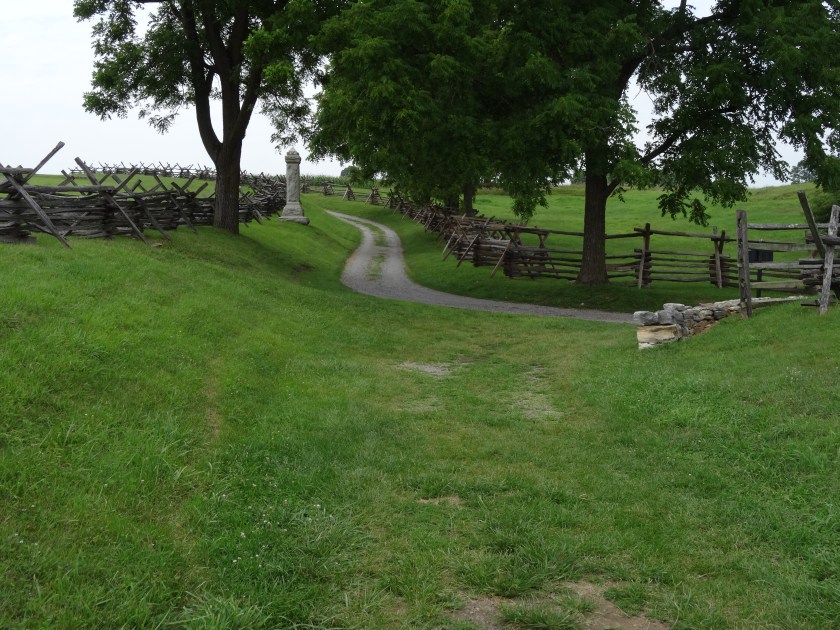
For some reason it won’t let me load the other two pictures I had for this.  This is the sunken road that was the key to the second phase of the battle.  The road is now called Bloody Lane because of how many men died here.

DSC01260

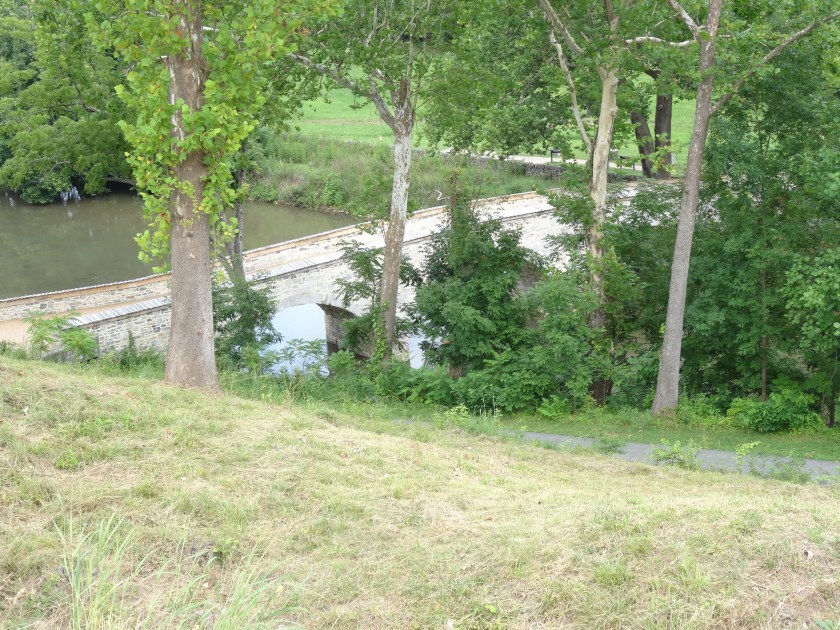
The bridge you see was called the lower bridge or Rohrbach’s Bridge, the Union officer here was assigned to push his men across and attack Robert E. Lee’s right.  The Union officer spent 2 hours trying to push his 12,000 men across, opposed by about 500 Confederate troops.  When he finally got across, it took another 2 hours for this officer to organize his men for an assault.  This delay allowed Lee’s final division to arrive on the field in time to break up the attack, saving Lee’s army.  The bridge is now called Burnside’s Bridge, in honor of the General who lost about 1,000 men trying to cross it.

I will stop there, though I could keep going.  But I think by now, most of my readers will have had enough.  One more thing to keep in mind here, though this is on a happier note, 5 days after the battle, and in direct response to the Union victory here (such as it was, anyway), Lincoln would issue the preliminary Emancipation Proclamation, which stated that all blacks living in areas in rebellion as of January 1st 1863, would be free.  So this battle, horrific and bloody as it was, led to something good.  Remember that when things get rough.  Happy Road-Tripping!

Oh, Shenandoah!

How does the old song go?

“Almost heaven, West Virginia
Blue Ridge Mountains
Shenandoah River” – John Denver

Did I get a song stuck in your head?  Good I hope so, because those two songs have been in my head all day.  Enjoy!

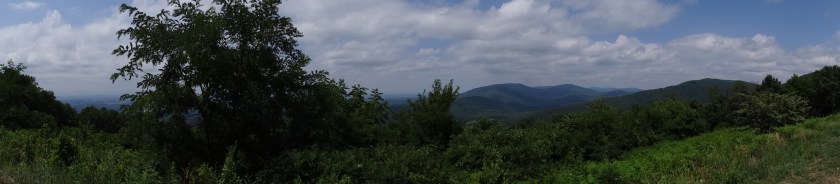
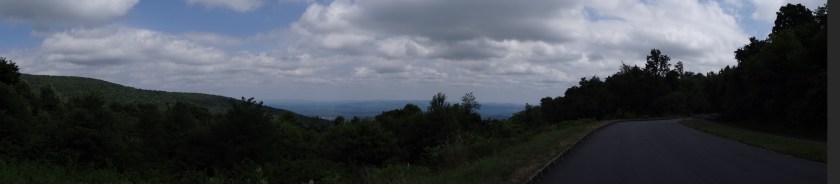
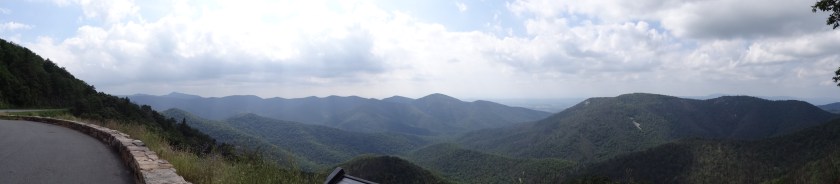
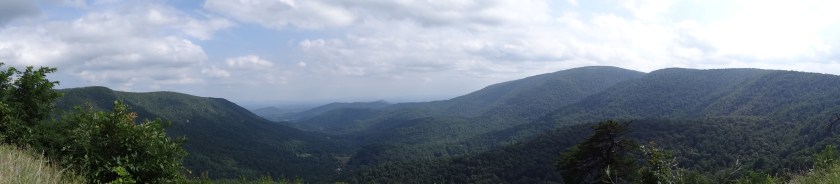
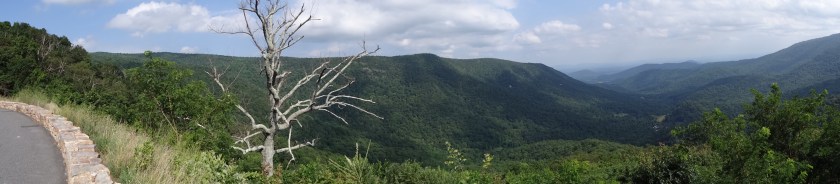
Anyway, I realized as I was traveling through the Shenandoah Valley that I lack 4 things to truly express what it is like.  First, a traveling buddy to take pictures when I can’t find a good place to stop, or perhaps to drive so I can take pictures.  Second, a very expensive camera, and the skill to use it to the utmost.  Third, a poet’s gift of words to express the beauty of this place.  Finally, time to truly see it all myself.

Alright, first some pics (yes, they are all panorama shots.  I have others, but we’ll use these):

DSC01203DSC01208DSC01209DSC01216DSC01222DSC01223

Like I said, the camera doesn’t do it justice, you’ll just have to come here and see it for yourself.  I believe all but the first one came from Skyline Drive in the Shenandoah National Park.  I only had time to do the southern third of it, and only stopped at about a third of the overlooks in that section.  No, I’m not exaggerating, there really are a lot of wonderful views.  I would like to come back in the fall sometime, and spend about a week exploring the park.  I did check out some history, and there is a lot of it, from colonial days (George Washington set up shop in the Winchester area as a surveyor, and acquired a fair amount of land for himself), to Civil War, and up through today.  Plus, it is just a nice, quiet, rural community.  Yes, I did love it here, and desperately wish I could spend more time.  Another thing I have to come back to see later.  Happy Road-Tripping!

Richmond, part 2

I drove in to Richmond today, wanting to see Monument Avenue.  They have monuments there to famous individuals who lived in Richmond.  I’ll start with this one:

DSC01196

I know it’s hard to see, the sun was behind it, but it is a monument to Arthur Ashe, Jr.  For those who may not be familiar with him (like me), I looked it up.  He was the first black man selected to the U.S. Davis Cup team, and the only black man (so far) to win the singles title at Wimbledon, the U.S. Open, and the Australian Open.  Impressive man.

There is supposed to be a civil rights monument, but I ran out of time, and didn’t find it.  I did find monuments for Matthew Fontaine Maury, the “Pathfinder of the Seas” (look it up), Robert E. Lee, Stonewall Jackson, Jeb Stuart, and Jefferson Davis.

I then traveled out to see some of the battlefields around Richmond.  I saw Cold Harbor, which has some of the best preserved entrenchments from the period.  I went to Glendale and Malvern Hill, and I visited Fort Harrison.  I’m not posting pics of those, because to be honest, pictures don’t really do justice to stuff like this, and I’ve shown a bunch of similar pics, so your probably getting ready for something else.  So, I promise, tomorrow, I will try to have something different to show you.  You’ll have to come back tomorrow to see if I succeed.  Happy Road-Tripping!

Richmond, Part 1

I visited the White House of the Confederacy and the Museum of the Confederacy.  Now both of these are actually part of the same organization.  The museum actually started in the house, until they built the current building, then they restored the “White House” to it’s Civil War appearance.  Most or all of the furnishings in the White House are period, and many are original to the house, though almost everything had been sold off after the war.  One piece, a bust of Jefferson Davis, was taken by a Union soldier as a souvenir, bounced around Massachusetts for a while, and was finally returned about a year ago.  A tea set went as far as Ireland before making its way back.

DSC01156

Before I continue, for those whose interest in history is less than mine, I want to list some things in the Richmond area that might interest you.  Agecroft Hall is a 15th century English manor house that was dismantled and shipped here (I don’t know why).  There is a Jewish History museum (Beth Ahabah Museum), Hollywood Cemetery has many famous Virginians buried in it, the home of Chief Justice John Marshall, the Edgar Allen Poe museum, and many more.  There are several sites and museums dedicated to civil rights leaders, and there is a Holocaust museum here as well.  That is only a small list, by the way.

Back to the Museum of the Confederacy.  There are battle flags, knick-knacks  from the era, personal effects of Robert E. Lee, Jeb Stuart, Stonewall Jackson, and many others.  There are uniforms in there that make me wonder about how much smaller they were than us.  For some reason I can’t load the pictures I want, but that’s ok, it would have been hard to see the scale of the clothing.  The pictures were an attempt to show how small they were, at least some of them.

DSC01172

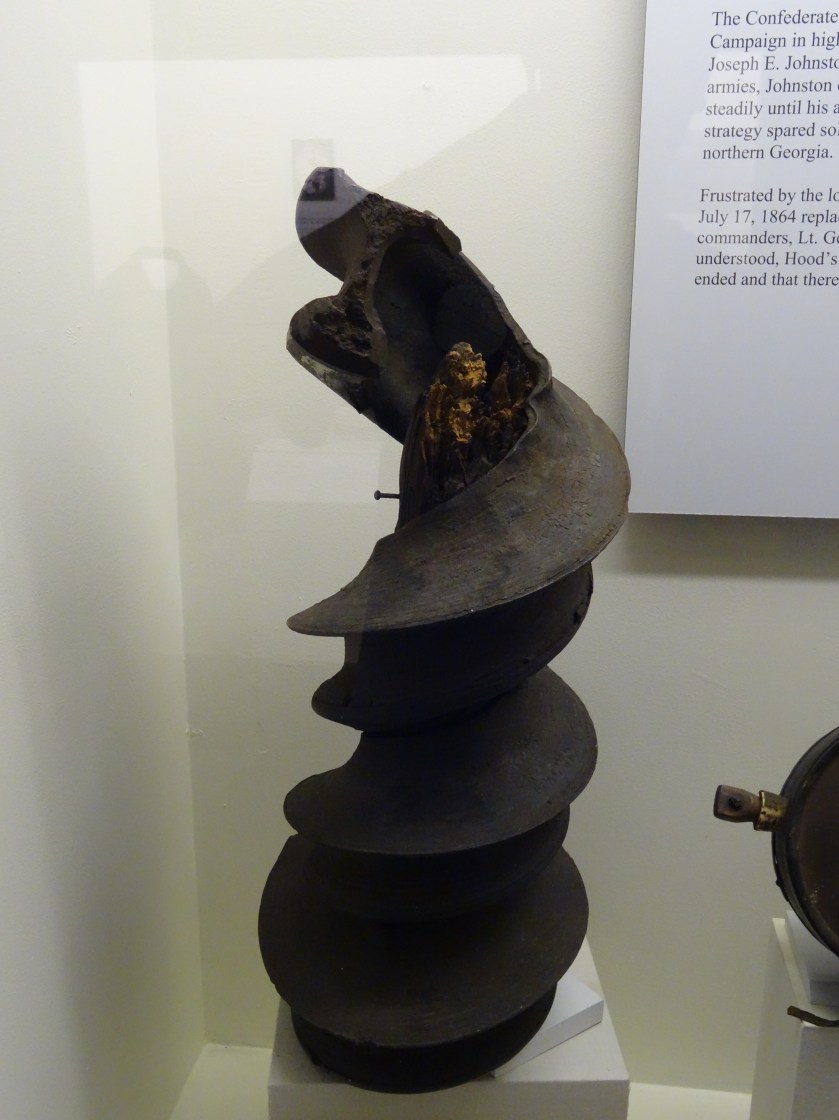
I wonder how many can tell what this is.  I couldn’t at first, because I had never seen one before.  This is a “Sherman’s Bowtie.”  Civil War practice was, when you came across the enemy’s railroad supply line, you tear up the rails, lay them on top of a fire (built using the railroad ties), and bend the rails.  Sherman’s men started doing this. This is a rail that has been wrapped around a tree (look close, you can see a tree still wrapped up in there). I had to look twice at it to see that it was a rail.

That’s all for today, Happy Road-Tripping!
Harper’s Ferry

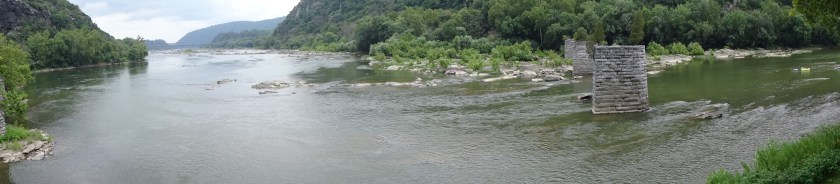
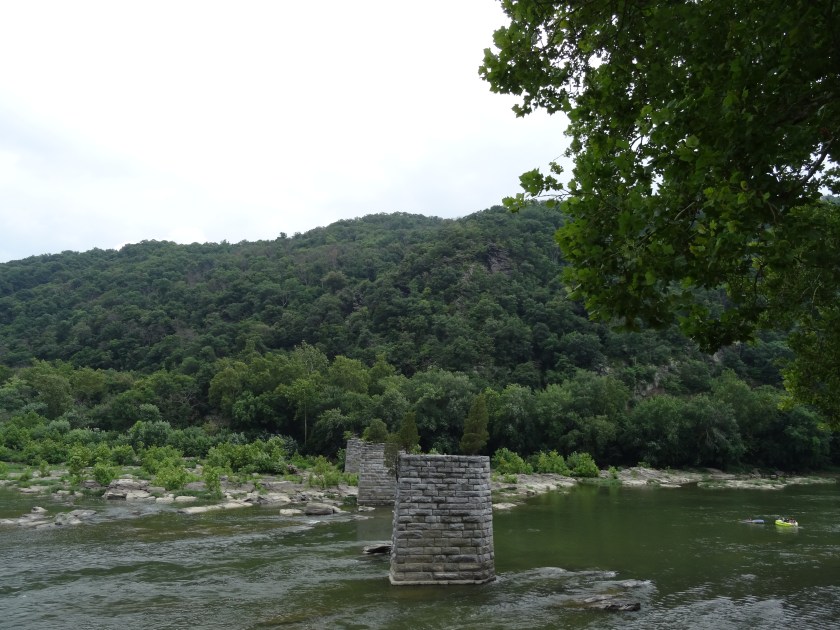
Thomas Jefferson felt that this area, where the Shenandoah and Potomac rivers come together, was one of the most beautiful places.  George Washington felt that this would be a good place for an Armory, likewise because of those two rivers.  Harper’s Ferry is a beautiful area, and I think it would be a wonderful place to buy some land and retire, were it not for all those tourists that keep coming through and making it so crowded. There is a fair amount of history, but (brace yourselves) I’m not going to talk about it on this post.  Today, I think I just want to show you how beautiful (I know I keep using the same word, but I can’t think of another one that sounds like how I talk) this area is.

DSC01149DSC01150DSC01142DSC01152DSC01151

The first image is the Potomac coming in from the left side, and than on the right side it is flowing away from the camera.  The next is the Shenandoah coming in from the left, and joining the Potomac about where you see the brick pillars.  The other three are just more shots of the area.  I hope you enjoy these shots.  This area is well worth visiting.  I will be spending more time in the Shenandoah later this week, so I hope to have more pretty pictures to show then.  Happy Road-Tripping!
Petersburg – a preview of things to come?

Petersburg is a city about 20 miles south of Richmond, Virginia.  It was a major railroad hub before the Civil War.  During the war, almost all the supplies used by the people of Richmond, as well as the Army of Northern Virginia, came through Petersburg.  U.S. Grant, after fighting Lee for over a month, decided that the best way to defeat Lee’s army was to capture Petersburg.  To keep this brief, cautious and timid generals caused him to miss his chance to capture Petersburg almost without a fight, and Grant was forced into a 9 and a half month siege.  I won’t bore you with everything, I just want to share one part of the campaign.

Some of the Union soldiers ended up in a position not far from the Confederate lines. They decided that rather than having to go over the top, they should run a mine underneath the nearby Confederate fort and blow it up.  This tunnel would be over 500 feet long, which the Army Corps of Engineers said was impossible.  The men who had proposed the mine were coal miners from Pennsylvania.  Who do you think won that argument?

So they dug the mine, loaded it with gunpowder, and set it off.  To keep this brief, the unit selected and trained to lead the assault, a division of colored troops (their term for it, not mine; don’t shoot me) was removed at the last moment from that role.  The division thrown in instead had no training, and to start with they panicked when the mine went off.  When they finally went forward, instead of going around the hole in the ground, they climbed down in to it, which trapped them.  When the Confederate forces converged on the area, it was the proverbial fish in a barrel.  The attack failed.

The top two pictures show a recreation of the trenches as they would have looked at Petersburg, which leads me to the preview.  Standard practice back then was when other nations went to war, the neutral nations would send “observers.”  The purpose of these was not to ensure good behavior on the part of the combatants.  They were there to see if they could learn new ideas or methods of waging war, or new technologies.  So, Petersburg was essentially 9 months of trench warfare.  Attackers would climb out of their trenches, run across no-mans-land, and try to capture the enemies lines, more often than not being shot to pieces instead.  Sound familiar?  Let me give you a hint:  WWI. Apparently the European observers watching the Americans fight at Petersburg learned nothing, because they would make the same mistakes just 50 years later, except they would do it for 4 years, not just 9 months.

Anyway, the bottom two show the area where the Crater (the name of the battle involving the mine) took place.  The hole was filled in, being more or less a grave for some 4000 men.  The U.S. army decided they should remove the bodies and rebury them in a military cemetery, but stopped after maybe a few hundred.  I’ll let you think about that.

Next, I wanted to visit a hero of mine, James Ewell Brown Stuart.  Most just called him Jeb.  He was Lee’s Cavalry commander, and according to John Sedgwick, who had served with Stuart before the war, and was a Union general, Stuart was the best Cavalry officer the U.S. had ever foaled.  During the Battle of Spotsylvania, the Union cavalry under Phil Sheridan left on a raid with about 10,000 riders.  Stuart took off after them with about 4,000.  Stuart was able to get between Sheridan and Richmond, at a place called Yellow Tavern.  There’s not much left of the battlefield, it’s been mostly turned into houses, or built over by new roads, etc., but I found a marker that shows where he was wounded. He was taken to Richmond, where he died the next day.  The saddest part was, as he was riding to catch Sheridan, he briefly stopped to check on his wife and children.  Stuart didn’t even have time to dismount.  His wife, due to difficulties contacting her, and with delays in her travel to Richmond, arrived after he died.  Here is a picture of the monument marking where he was wounded (the one on the right), and a picture of where he is buried in the Hollywood Cemetery (yes, that is its name) in Richmond, where he is buried next to his wife.

Now some of you might ask me why I count him a hero, when he was a Confederate, fighting against the government, and fighting for slavery.  I am not going to get into a defense of him here.  I admire him because he was brave, and he was valiant, and he was faithful.  He wasn’t perfect, he made mistakes, but he learned and moved on.  If I can only have heroes, or only have respect for people I agree with 100%, I will have no one on that list, not even myself.  That is why I am proud to call him a hero, along with many other individuals.  Eventually you may meet a few more on here.  I would be interested to hear about some of my readers’ (all 5 of you) heroes.  Who do you admire, and why?

Happy Road-Tripping!