The land of the free, the home of the brave!

I took a break from the Civil War today, and went back further in time to a more formative time in our nation’s history.  If you can’t guess where I went today, based on the title of today’s post, I went to Fort McHenry.

I want to start off by saying, if you haven’t been there, make sure you see the movie in the Visitors’ Center.  It was very good, and explained the battle, and the song, very well, I thought.  I actually got a little emotional, which should say a lot.  I won’t say more than that, because anything I say here just won’t do it, you’ll have to see it for yourself.
DSC01095DSC01093DSC01094DSC01105DSC01109

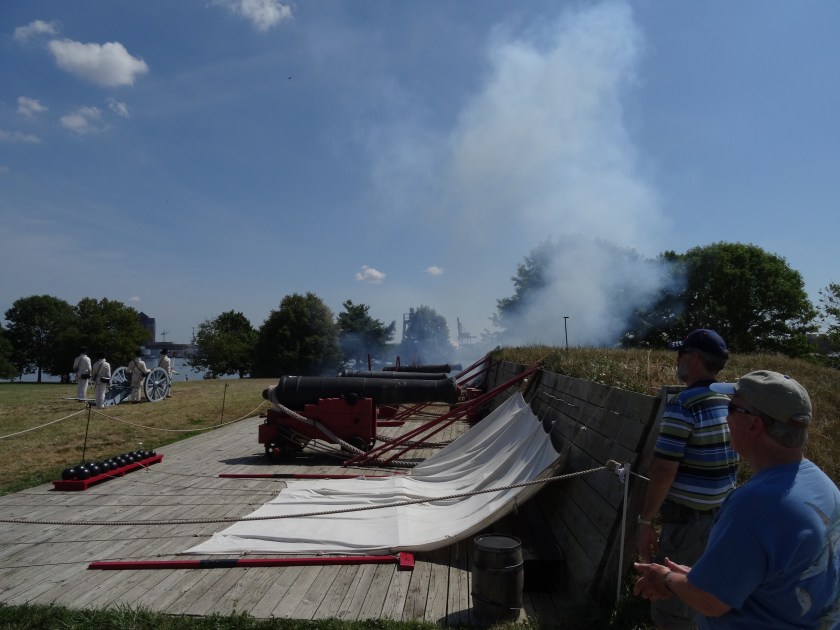
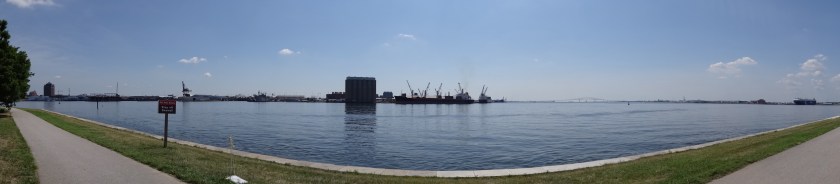
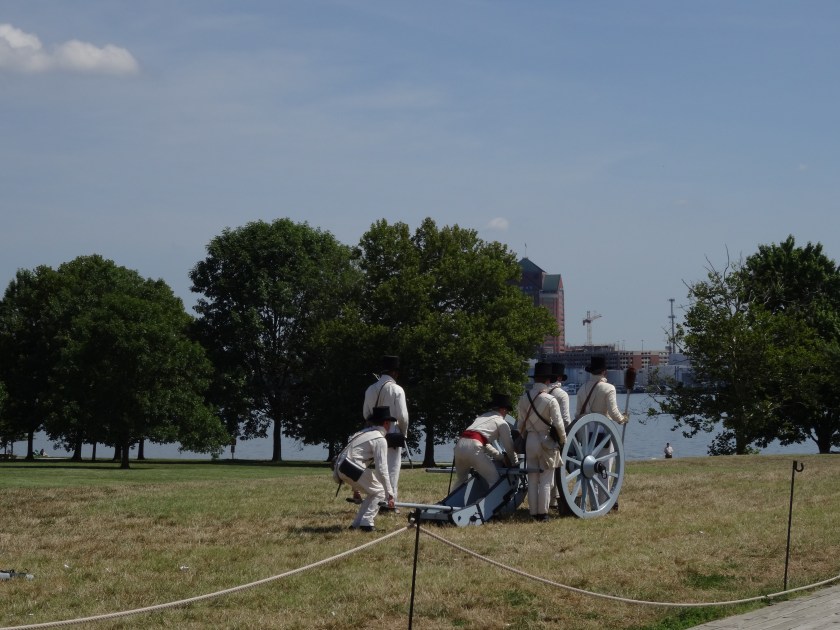
The first picture is the harbor.  The British ships would have been about 2 miles out.  If you look close in the picture, you can see a bridge in the distance on the right.  The ships would have been about halfway out to the bridge.  Of course, it wasn’t there in 1814. Next is a couple of pictures of the staff firing a cannon.  They are wearing the uniforms that the soldiers in the fort would have worn.  The first picture is right before they fired, the next is right after.  That’s the best I could do to get a picture of the shot, I was covering my ears.  If you want to see a picture right as a cannon is fired, go back to my post from Savannah.  There’s a picture on there, if I remember.

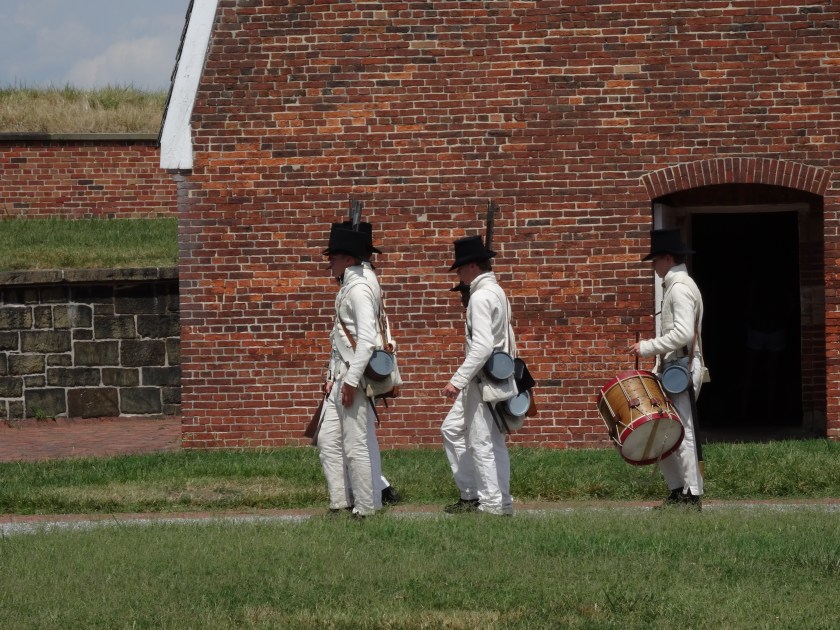
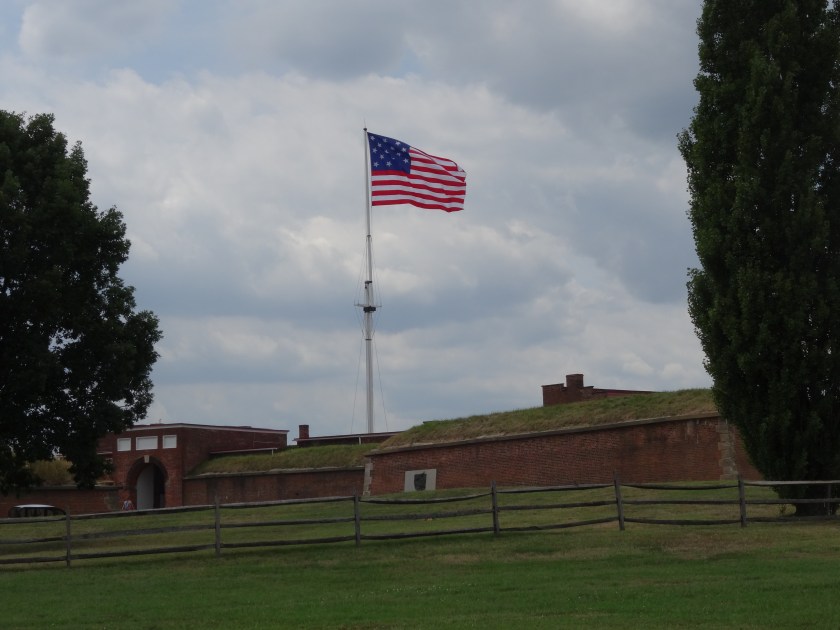
Next picture is the Fife and Drum corps, or at least 3 of them.  They came and talked to us about the Fife and Drum corps, what it’s role was, and played some songs that would have been played in the fort.  Finally, a picture from outside the fort, showing the flag. This flag is what the flag looked like (15 stars, 15 stripes), but is about half the size of the flag raised in the morning after the bombardment that inspired Francis Scott Key.  They have one that size as well, but they weren’t flying it today.  Oh, well.

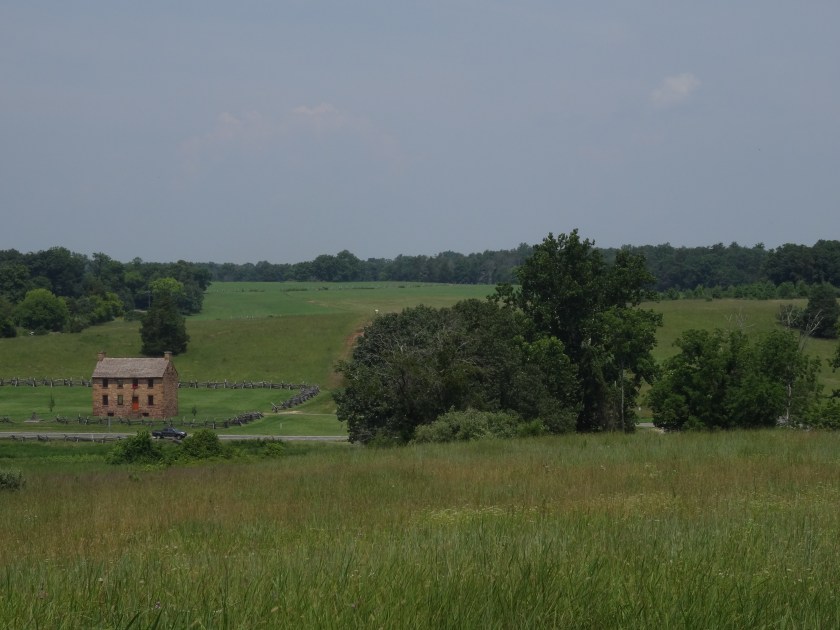
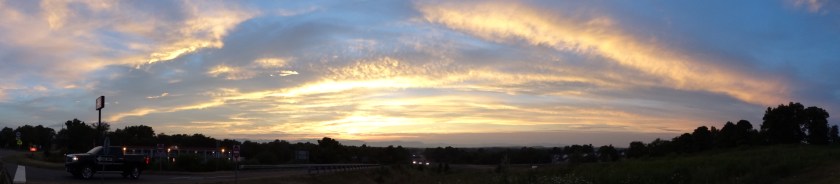
One more picture for you.  I have mentioned that it is difficult to take pictures of pretty or cool things I see while I’m driving.  I saw this, and had to find a place to pull over.  I wasn’t sure I would be able to find a place, but after about probably 20 minutes, I found a place right before I turned into my hotel parking lot (which is down in a little valley, or perhaps I should say “hollow”, and wouldn’t have worked.  Enjoy!
DSC01110

Happy Road-Tripping!
By a small stream

This is Bull Run, a small stream, probably only a few feet deep at most.  The bridge is called the Stone Bridge.  On July 21st, 1861 (I just realized that tomorrow is the anniversary of the battle, which was not my intent), the first shots of the First Battle of Manassas (or Bull Run, if you prefer, both are correct) were in this area, but were a diversion for a flank attack.  This bridge would also play a part in the Second Battle of Manassas a little over a year later.  This was the route the Army of the Potomac used to retreat after the battle.

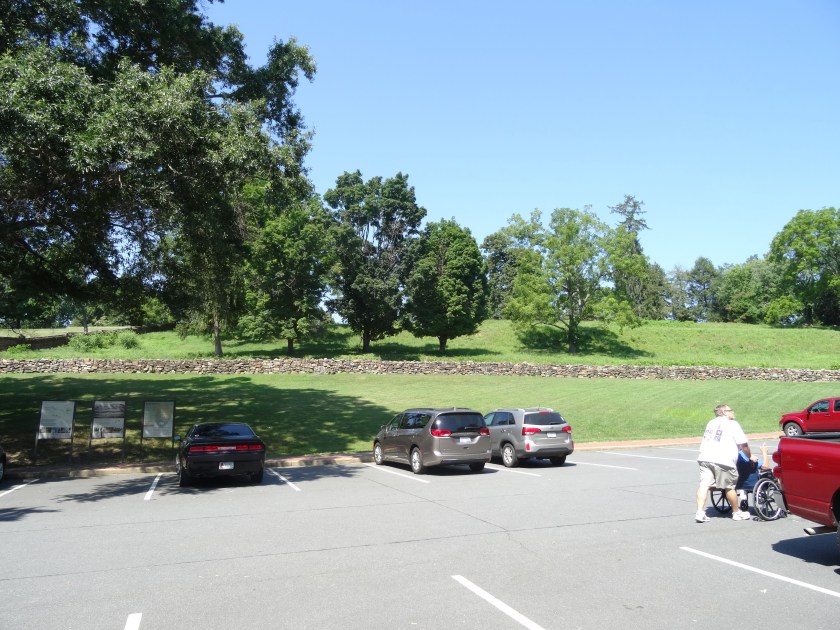
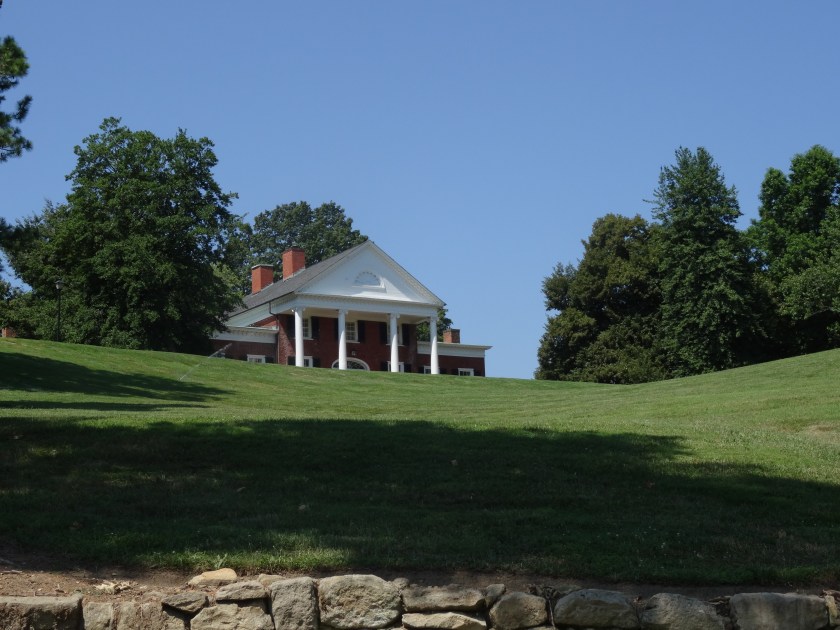
The first picture shows where a Confederate general, newly arrived on the field, set his brigade.  The cannon, roughly where he put them, immediately began a duel with some Union artillery about 300 yards away.  His infantry was posted over by the trees to the right of the picture, which is on the reverse slope of Henry House Hill, where I was standing.  The second picture shows where the Union army was approaching, the hill in the distance is called Matthews’ Hill.  The house you see in this picture was built by the Henry family after the war.  The house that stood there during the battle was heavily damaged and uninhabitable.  The General that I have been talking about had been an instructor at the Virginia Military Institute before the war.  His students had called him “Old Tom Fool” for his eccentric (to put it nicely) behavior and teaching style.  After this battle, he would have a new nickname, Stonewall Jackson.  The brigade he led would be forever called the Stonewall Brigade.

Now, Second Manassas started on the Brawner farm, where Stonewall Jackson, who had been hiding all day, attacked a brigade that wandered to close to his position.  This brigade, of which most of the men were in their first fight, acquitted themselves well by standing and fighting, even though they were badly outnumbered and had been surprised by the attack.  Another brigade would earn undying glory on these fields, just a few miles from Henry House Hill, and a new nickname, the Iron Brigade.

DSC01074DSC01075DSC01078DSC01080

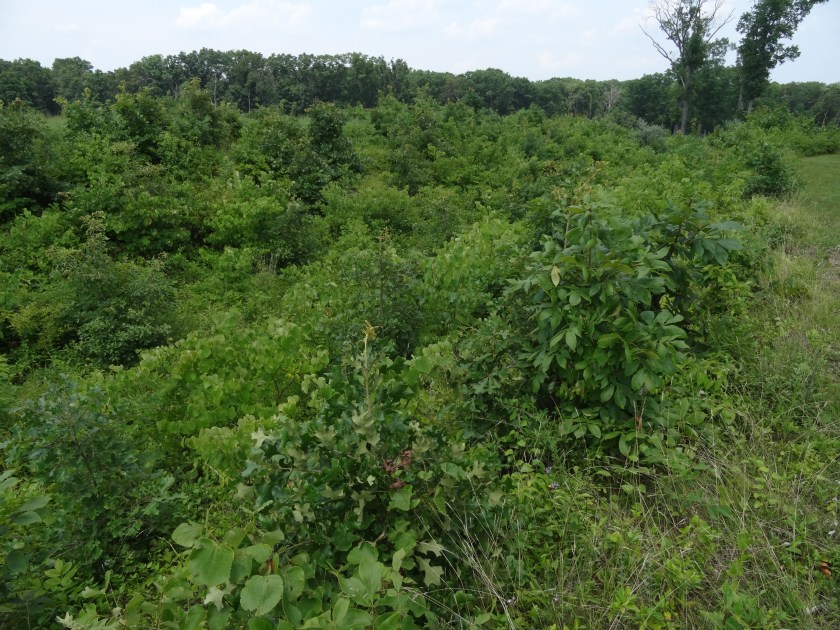
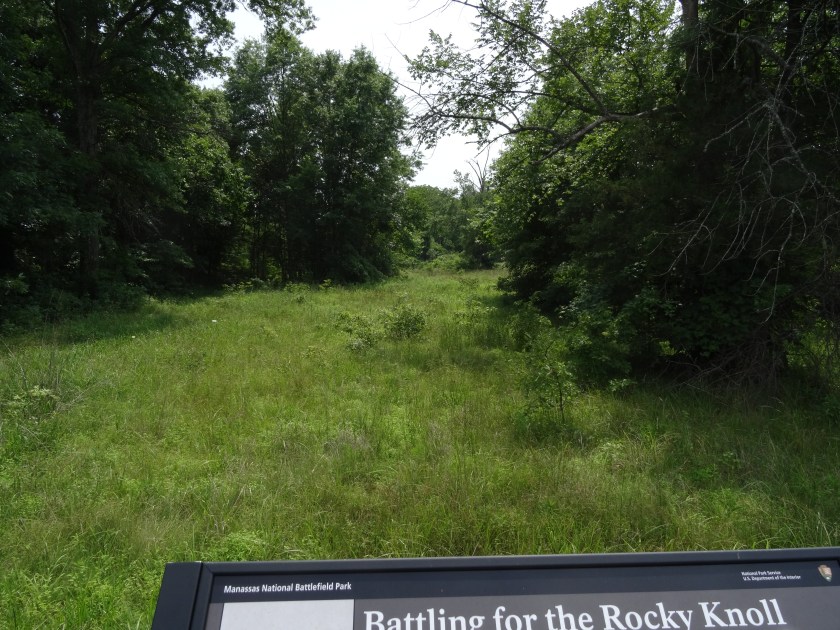
The top image is Brawner’s Farm, where Second Manassas started.  The last three (I know it’s hard to tell, but trust me, it’s there) is an unfinished railroad cut that Jackson used for his defensive position during the battle.  Its quite overgrown, as you can tell, but it is there.  The last picture is actually in the bottom of the cut, on the north end of Jackson’s line.

It was very hot today, so I didn’t get to do as much as I had hoped, but oh well, that’s travel for you.  Happy Road-Tripping!

4 battlefields, plus more.

Today, I visited Fredericksburg, Spotsylvania, Chancellorsville, and Wilderness Battlefields.  “What about the plus more?” you ask.  I’ll come back to that.  I will talk about these briefly, along with a pic or two, but not in the same order I visited them, shown above.

First, Fredericksburg.  This battle was fought in December 1862, about two months after the Emancipation Proclamation was announced, and a few weeks before it would take effect.  It was an embarrasingly lopsided defeat for the Union side; as in about 13,000 casualties for the Army of the Potomac, and a little over 5,000 for the Army of Northern Virginia (and I have read one source that claimed that about a thousand of those for the Southern army had just gone home for Christmas without telling anyone, and then came back).  The battlefield is hard to really show, because the town has grown by about 10 times since the war, but here are a couple pictures.

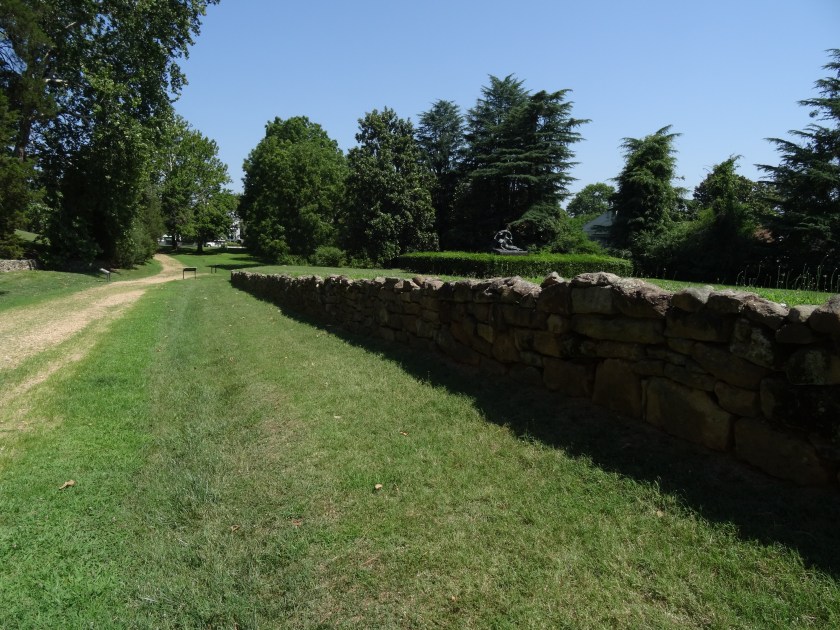
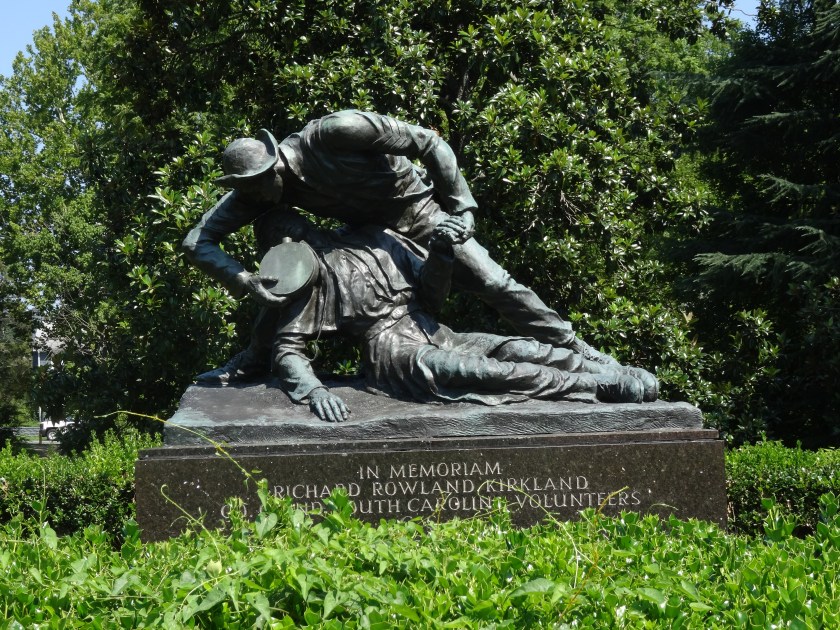
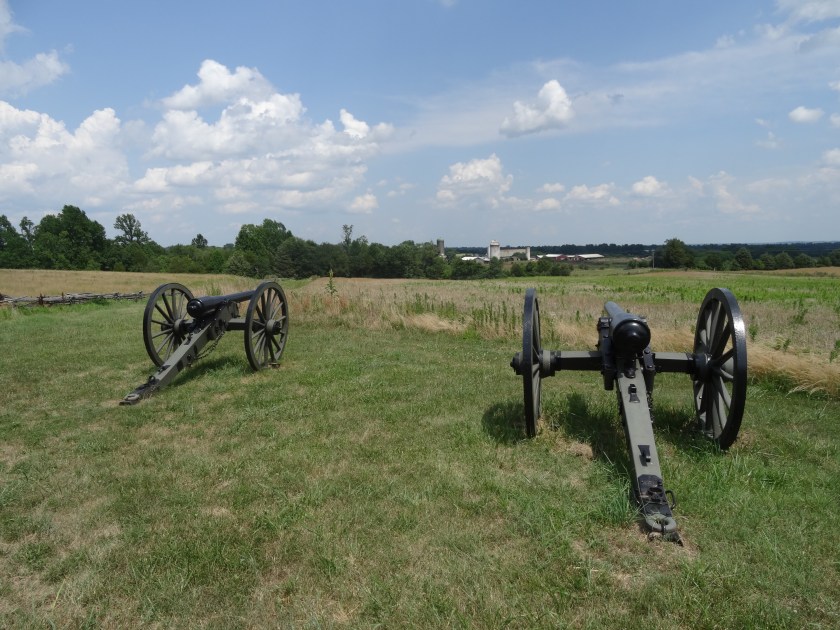
DSC01013DSC01022DSC01021DSC01020DSC01019

Top two are of Marye’s Heights, where Confederate artillery was posted.  The third shows a portion of the stone wall and sunken road, which made a ready-built entrenchment for the Confederate infantry.  The last two show a statue, and the plaque that commemorates Richard Kirkland, a member of Lee’s army, who, the day after the fighting, took pity on the Union soldiers lying wounded on the field and brought them water.

Next, Chancellorsville.  Frequently called Lee’s masterpiece, because he defeated a Union army more than twice the size of his own, by dividing his army again and again to meet the needs of the moment.  However, it cost him dearly.  Stonewall Jackson, whom Lee would call his Right Arm, was wounded, had his left arm amputated, then died of pneumonia about a week later.  This loss was irreparable to the South.

The first two pictures are an attempt to show you what the Wilderness (the area where the Battles of Chancellorsville and the Wilderness took place) looks like.  In the second picture, there is a road about maybe 50 feet away.  You can see it, barely, but it disappears pretty quick.  And it’s a busy road too, but if you get more that about that 50 feet away, you can’t see them anymore.  My understanding though, is that in 1863, it was more tangled and overgrown than it is now.  The last picture is a monument to Stonewall Jackson, approximately in the area where he was wounded.

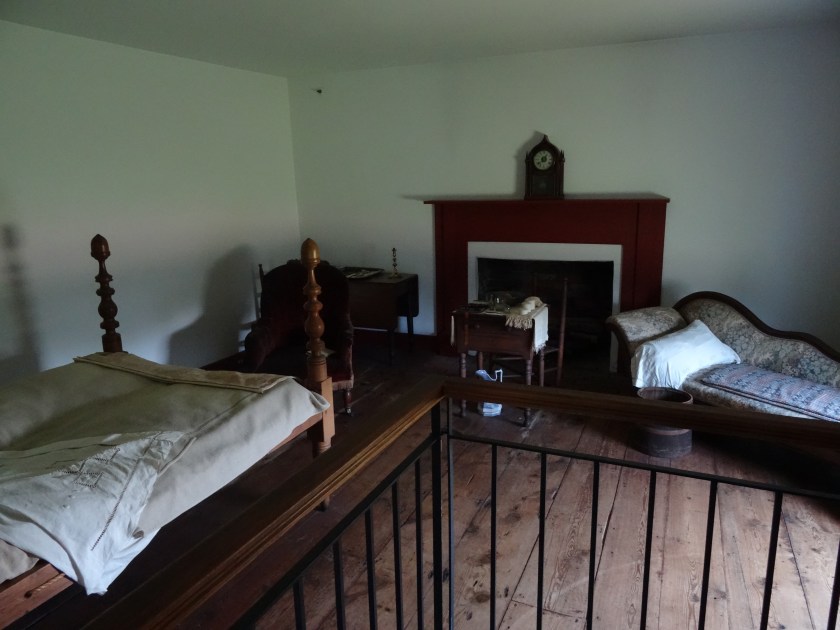
Now for the plus.  I visited the place that they took Stonewall Jackson after he was wounded.  Here is a picture of the room he was resting in when he died.

DSC01025

The clock, the floor, the blanket, and the bed frame are original.  Jackson died on May 10th, a Sunday.  He said that he had always wanted to die on Sunday, and his final words were, “Let us cross over the river, and rest in the shade of the trees.”

Next, The Wilderness.  The first battle after U.S. Grant has been appointed Commander of the armies.  I won’t show any pictures on this one, because the area looks the same as Chancellorsville, and I’ve probably bored you enough with the history lesson.  So to wrap it up, after the Wilderness came Spotsylvania.

This is a picture of the entrenchments at Spotsylvania, first how they look after about 150 years, and an example of how the looked during the battle.  This battle lasted about 13 years, with heavy fighting on about half of the days, and 1 day saw fighting that lasted 20 hours, and was essentially hand-to-hand combat.

Alright, that’s enough.  It was a busy day, but a good one.  I honestly could have spent a day at any 1 of those battlefields, but I just don’t have time.  Maybe another year I can find a way to do these battlefields justice.  Someday.  Happy Road-Tripping!

Gettysburg

The name seems to always affect people, even when they don’t know too much about it.  It’s probably the one battle from the Civil War that everyone knows.  I got there about 11 this morning, and didn’t leave till about 7, and still had stuff I had to miss out on.  The largest battle of the Civil War, in the whole Western Hemisphere, in fact.  Nearly 170,000 men fought there, and 51,000 men were casualties, with about 7500 of those dead.  3 days of intense fighting in the hot July sun.  I won’t bore you with any more details, I would be here typing all night, and no one would read my post.  Suffice it to say, there’s a lot to see and do there.  If you go, I highly recommend the video and the cyclorama, which is a giant painting that wraps 360 degrees around you showing the chaos of Pickett’s Charge on the third day of the battle.  No pictures of it, but here’s a few from the battlefield.

Top is a view of the center of the field from Robert E. Lee’s view point, about where he might have watched Pickett’s Charge from.  the big picture on the bottom is the Virginia Monument, with General Lee riding Traveller on top of the monument.  Upper right is the federal view of where the charge took place.  If you look carefully, you can see the Virginia monument on the other side of the field.  Bottom right is General Meade, riding his horse, Old Baldy.

I did notice some behavior that saddened me as I was touring.  There is a monument to James Longstreet, shown here:

DSC00980

As I was walking up to it to get a picture, I saw a father taking a picture of his teenage son sitting on the back of the horse, as if riding with Longstreet, and after his son got off, his daughter climbed up on it.  Later, I saw a mother and young son rubbing their hands across a stone monument to read the words.  These monuments, some of which are nearly a century old, if not older, need to be shown respect, not used for a fun picture. Hands off, unless you are told otherwise by a park employee.  Please, and thank you.   Anyway, enough of the rant, but it bothers me.  Enjoy looking at the wonderful sights, but remember that most of them are not to be touched.  Happy Road-Tripping!

I guess I could just buy more clothes, right?

So today was laundry day, so I can have clean clothes to wear.  But I won’t bore you with that, as that only took a few hours out of my day.

After doing that, I drove down to Montpelier to visit our 4th President, the Father of the Constitution.  I learned some cool stuff, like Madison did research for months before the convention, trying to figure out what had worked in this type of government, and what hadn’t.  He even had Thomas Jefferson, who was in France as the U.S. Diplomat, send him about 400 books on the subject.  He was the last of the Founding Fathers to die.  His wife, who outlived him by 13 years, not only set the precedent of the First Lady running the social scene, but she knew personally the first 12 presidents of the U.S., and may have met a certain tall, lanky Representative from Illinois at the cornerstone ceremony for the Washington Monument.

Front and rear views of Montpelier.

I then stopped for a bit at a little-known battlefield called Cedar Mountain.  This was part of the prelude to 2nd Bull Run (or 2nd Manassas, whichever you prefer).  Stonewall Jackson’s Corps had been sent up from Richmond to stop a Union Army led by General John Pope, who was threatening Richmond from the north side, while Lee was dealing with McClellan from the southeast.  At Cedar Mountain, Jackson’s Corps ran into a Union Corps led by Nathaniel Banks, who had fought Jackson in the Shenandoah Valley (more on him when I go to the Valley).  Jackson had more men, but his men were not all on the battlefield when it started.  At the climax, Jackson’s men are beginning to retreat, when Jackson rides up to the spot.  Jackson sees the potential disaster, and in an effort to rally his men, reaches to pull out his sword, only to find that through disuse, his sword is now rusted into his scabbard.  Not letting this stop him, however, he pulls it all off his belt, sword and scabbard and raises it above his head.  He calls to his men, “I’m here to lead you!” or words to that effect, and begins to ride toward the enemy.  His men, or at least enough of them, turn and follow him, saving the day for the Confederacy.  However, this will be the last (as well as probably the first) time he will attempt to wield his sword.

I don’t plan to do this often, but I find that story not only awe-inspiring (at Jackson’s leadership, and his men’s trust in him), but amusing as well (the sword being rusted into the scabbard).  Just one picture, there really isn’t much there, in fact parking for this battlefield is actually in some guys front yard (no, I’m not kidding).  This would have been part of the Confederate position, with the Yankees advancing from probably about where those buildings (which probably weren’t there in 1862) are in the distance.

DSC00954

Happy Road-Tripping, everyone!

The Virginia Dynasty (part of it, anyway)

I started out by driving down to Charlottesville.  “Why?”, you ask.  I’ll tell you.  It is where you find the only U.S. presidential home that is on the list of U.N. World Heritage sites.  If you need another clue, the owner of this home is on Mount Rushmore, has a memorial on the Mall in Washington, D.C., is pictured on the $2 bill as well as the nickel.  I’m talking about Thomas Jefferson’s Monticello.

Writer, scientist, philosopher, inventor, architect, politician.  Probably more titles fit, as well.  All of these fit Thomas Jefferson.  He designed (and redesigned, and redesigned) his home at Monticello.  He wrote the Declaration of Independence (the accomplishment he was most proud of in his life).  He also wrote the Virginia Statute on Religious Freedom, which ended state religion in Virginia.  He founded the University of Virginia.  Those three things are what he had engraved on his tombstone (which he also designed).  Interesting side note; The graveyard is still in use today, and members of Jefferson’s family are still buried there.

I then drove next door, to visit the home of James Monroe, our 5th U.S. President, and third straight from Virginia.  The main portion of this home actually burned down at some point, but they found the foundation a few years back, next to an oak tree that is probably 300+ years old.  The house that is there, is actually three separate builds, first by Monroe as an expansion to his home to provide more guest rooms, another room added at some point in the 1850’s, and the third added in the 1870’s, if I remember right.

Left is the oak tree, that would have been there when the Monroe family first bought the property and built the home.  I think if you look closely at the bottom of the picture, you can see some stones laid out to show where the foundation of the home was.

Upper right is the three sections of the home, the Monroe’s built the section on the right, the middle piece was added some 30 years later, and finally the section painted in yellow (or gold) was added much later.  The bottom right picture shows the Monroe portion.  Again, this was not the original house, but was added while Monroe was President to accommodate the increased number of guests he received whenever he was home.

I don’t know if any of you have noticed, but I haven’t been showing pictures of the inside of these homes.  It is because they don’t allow photography inside.  I would love to show you the inside, especially Monticello, but you’ll just have to come out and see it for yourself.  A picture rarely does justice to its subject anyway.

I wanted to stop and see James Madison’s home, but got there too late, so I’ll have to try to work him in another day.  Happy Road-Tripping!

Virginia’s Historic Triangle

Today, I visited three cities that have played a major role in America’s history.  One isn’t as well known as the other two, and another of the three is more known through myths and legends, but all are fun, if you can find the time to really do them justice.

First, I went to Yorktown.  This was the final battle of the Revolutionary War, at least for the United States.  I got there right before the park opened, planning to spend about two hours looking around.  Here are a few pictures.

Clockwise from top left: Redoubt 10, captured from the British by the Americans, led by Alexander Hamilton, on the 14th of October, 1781; signpost with info on Redoubt 10; Redoubt 9, captured by the French on the same night, which allowed the American and French armies to begin shelling the British positions at point blank range; Sign for Redoubt 10; the Moore house, where the articles of surrender were negotiated; and part of the Surrender Field, where the British and Hessian troops laid down their arms.

I said that I intended to stay at Yorktown for about 2 hours, I ended up being there for 4, and I really only saw a small part of what there is to see.  What it meant, though, is I didn’t have time to go to the Colonial Village at Williamsburg, where actors dress and talk as if it were 1700’s Williamsburg.  This would have been fun, and would be a great place to take kids.  I did stop by for a minute, to see if I could get a picture, but I would have to pay to get in to see anything, so I will have to come back.  I then drove to Jamestown, and saw restorations of the original fort, and a few buildings.  Here we have a monument built in 1907 to commemorate the 300th anniversary of Jamestown, a scale model of what they believe Jamestown may have looked like, and a statue honoring John Smith (looks a little different than the Disney version, huh?).

I would have liked some more time there, but I was hot, tired, and sweaty, and ready to get to my hotel room, a two hour plus drive, where I will stay for a couple weeks in order to see as much of Virginia as possible.  Maybe if I have time, or more accurately the inclination, I’ll drive back down and take a little more time.  But most likely, I’ll have to wait till next time I get back here.  Happy Road-Tripping!

Visiting the Monitor (and some other stuff)

Today, I decided to take it a little easy, so I just went to the Mariner’s Museum in Newport News.  I was drawn here initially, because they actually have parts from the U.S.S. Monitor, which is the U.S. Navy’s first ironclad vessel.  It brought several ideas together that would change naval warfare, such as a low profile, and guns in a turret that could fire in any direction, regardless of the ships orientation.  The museum was pretty cool, because they discussed maritime practices and tools from man’s first sea voyages till today.  I am proud to say, that this museum actually gives credit to non-European cultures, such as the Polynesians, Chinese, Arabs, and Africans.  They also have models of many ships, either actual ships, or examples of a type of ship.  These models are built there at the museum, and apparently you can watch the model maker at work.  They had a model of the first aircraft carrier (vintage Civil War, carried an observation balloon and had equipment to fill it with lighter-than-air gas).  One hall was devoted to the Monitor vs. Merrimac fight, the first battle between ironclads in the world.  This included full size models of at least portions of the two ships.

Clockwise from top:  Two cannon that were part of the defenses of Havana, Cuba while Spain controlled it (manufactured in the early 1500’s); an actual cannon from the C.S.S. Virginia (commonly called the Merrimac), it was hit by a round from the U.S.S. Congress, I believe, and replaced that night, before the battle with the Monitor; what it may have looked like if you were watching the finishing touches of the construction of the C.S.S. Virginia; the actual turret of the Monitor; a replica (I’m guessing life-size?) of the U.S.S. Monitor.

Getting back to the turret, I know it’s not much to see, but it did spend about 150 years under the ocean.  It will sit in this tank, probably for years, having the salt and other chemicals leached out of the iron, so that when they are done, it can be in the air without crumbling away.  Otherwise, we would lose this historic treasure.  I hope I can come back and see it when it is ready to display.

I then went to dinner at a place called “Harpoon Larry’s Fish House and Oyster Bar”.  I decided to splurge a little and ordered the shrimp and grits.  They were very good (sorry, no pictures, I know you’re heartbroken).  I then decided to do something very out of character for me, I ordered dessert.  They had Key Lime Pie, which my server assured me was made with real key limes.  I don’t know, but it was very good.

Happy Road-Tripping!

Touring Hampton Roads by boat

Today I took a 3-hour tour (yeah, I know) of Hampton Roads.  This is an amazingly large harbor in southeast Virginia, that has played a huge part in American history.  Jamestown is not far from here, along with Williamsburg and Yorktown.  It is home to the largest naval base in the world, and witnessed the first fight between ironclad warships in history.

I have always wanted to see an aircraft carrier, and now I have seen a bunch of them.  I hope I get the names right but here we go.  Number 72 is the U.S.S. Abraham Lincoln, and has just completed a refuel/major refit and will soon be back on active duty.  73 is the George Washington and is preparing to begin the process of refuel/major refit.

Here we have the newest aircraft carrier in our fleet, the U.S.S. Gerald Ford, which will be commissioned in a couple weeks, next to the Eisenhower, where those invited to the ceremony will be seated.  Lots more ships, lots to see, and a nice cruise.

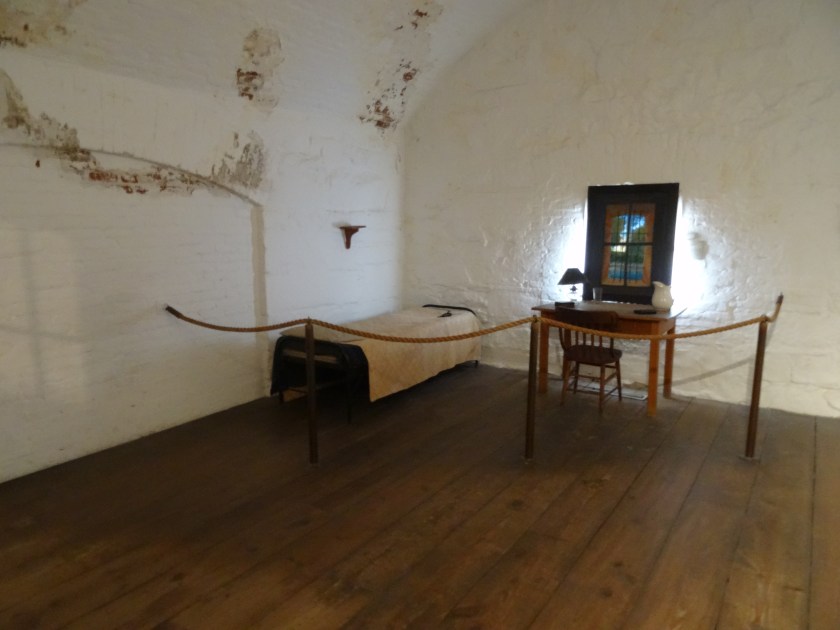
I then went to Fort Monroe, the fort built in the early 1800’s to defend this harbor.  This fort remained in service until 2011, helping to defend our shores.  It remained in Union hands throughout the Civil War, and was where Jefferson Davis was imprisoned for a few years after he was captured in May 1865 in Georgia.  The following is a picture of the room he was kept in.

DSC00865

That’s all for today.  Happy Road-Tripping!

2 days in North Carolina

Some of you may have noticed that on yesterday’s post, I shared the pictures from Charleston, but I didn’t talk about what I did yesterday.  There was a method to my madness (at least this once).  I decided that, since I would be spending 2 days in North Carolina, I would discuss it all at once.

Yesterday, I visited Fort Fisher, the fort that protected Wilmington, and kept the city open to blockade runners during the Civil War, until the fort fell in January, 1865.  This was the last major port left to the Confederacy, and the last place where the Confederacy was able to import supplies.  When Fort Fisher fell, it was a crucial blow to Lee’s army, and Lee surrendered less than three months later.

These pictures show part of the fortifications, which are about all that’s left.  Much of where the fort stood is now under water.

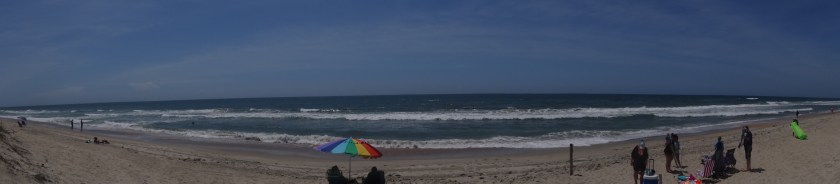
Today, I drove to Hatteras, which if you look at a map, is a long ways down the string of barrier islands that help protect North Carolina’s coast from the sea.  They have a museum down there called “Graveyard of the Sea”.  This museum highlights a few of the hundreds, perhaps thousands of ships that have sunk in the area of Cape Hatteras.  Most of the museum doesn’t allow pictures, to protect the artifacts.  Here is a picture of the beach near the museum.

DSC00833

I then went to Kitty Hawk, to see where the Wright Brothers were able to make their flights, proving that man could fly.  I didn’t stay long, but here a few pics.

From the left: the Monument put in by the U.S. to commemorate the location; the stone marker showing where the four flights they made that day took off; and the four markers showing how far each of the four flights lasted.  3 of them weren’t very long, but it proved that powered flight was possible, and inspired Orville and Wilbur to continue their efforts.

In answer to another question, I really haven’t had anything spectacular food-wise, but I wasn’t really looking, either.  I think that catches me up to today, so hopefully this has been of some interest so far.  Let me know if any of you have any questions, and I’ll try to answer them as best I can.  Happy Road-Tripping everyone!